
industry use cases - automotive & aerospaceLaser Marking in Automotive & Aerospace
Let’s be honest. As a production or quality manager in the automotive or aerospace industry, your world is one of precision, performance, and accountability. Every part has to be tracked. Every code has to be readable. And every mark needs to last — through heat, vibration, and time.
You don’t have room for fading ink, misplaced labels, or manual errors. That’s where laser marking steps in. It’s fast, clean, and permanent — designed to keep your operations compliant and traceable, without disrupting your line.
Let’s explore how laser marking is making a real impact across automotive and aerospace manufacturing.
The Challenge:
Automotive and aerospace parts operate in extreme environments — and that means any traceability mark needs to hold up. Stickers fade. Ink smears. Manual stamping isn’t scalable.
How Laser Marking Solves It:
✔ Permanent DPM (Direct Part Marking) on metal, alloy, and coated surfaces
✔ Resistant to abrasion, oil, fuel, and temperature extremes
✔ Meets industry standards like IATF 16949 and AS9100
Implementation Example:
A fiber laser engraves 2D DataMatrix codes and serials onto brake discs, connecting each part to the MES system for real-time tracking through production, testing, and shipment.
The Challenge:
From engines to seats to chassis, every part in the supply chain needs a unique identifier for warranty tracking and recalls. Manual systems can’t keep up — especially with high-volume production.
How Laser Marking Solves It:
✔ High-speed, high-contrast marking of VINs, part IDs, and barcodes
✔ Integrates with existing MES, ERP, and traceability software
✔ Consistent placement and size across all production shifts.
Implementation Example:
An inline laser marking system applies VIN codes onto automotive frames at full line speed — while a vision system confirms readability in real time.
The Challenge:
Fake parts aren’t just a business problem — they’re a safety risk. You need to ensure authenticity without adding complexity to your production process.
How Laser Marking Solves It:
✔ Marks micro-text, encrypted barcodes, and tamper-proof identifiers
✔ Supports brand protection initiatives
✔ Invisible or UV-reactive marks for covert authentication.
Implementation Example:
An aerospace supplier uses UV laser technology to apply hidden micro codes to turbine blade housings, verifying authenticity at every checkpoint from manufacturing to maintenance.
The Challenge:
Thousands of small components move through your lines daily — and each one needs to be identifiable. Labels are too small or too fragile to stick, and manual marking doesn’t scale.
How Laser Marking Solves It:
✔ High-speed, contactless marking for small parts
✔ Zero downtime from ink or label changes
✔ Precision beam control for tight spaces and tiny surfaces.
Implementation Example:
A Tier 1 supplier uses compact fiber lasers to mark batch codes onto fasteners and plastic connectors at 200 parts per minute — no consumables, no mess, and no rework.
The Challenge:
The industry requires full traceability from raw material to final assembly. Missing or unreadable marks are compliance liabilities — and costly ones.
How Laser Marking Solves It:
✔ Produces readable, auditable marks for life
✔ Meets automotive and aerospace regulatory standards
✔ Integrates with serialization and audit trail systems.
Implementation Example:
An aircraft component manufacturer uses green lasers to apply serialized part numbers onto composite housings. The system automatically logs each mark and links it to the product’s digital file.
product storyHow a Tier 1 Auto Supplier Cut Marking Errors by 95%
One automotive supplier was relying on inkjet printers to apply tracking codes to engine components. It worked — until parts got oily, labels fell off, and codes started smearing. The result? Wasted parts, failed audits, and a lot of rework.
⚠ 40% of components were failing post-process readability checks
⚠ Labels were slipping off during engine testing
⚠ Technicians were wasting hours on manual rework
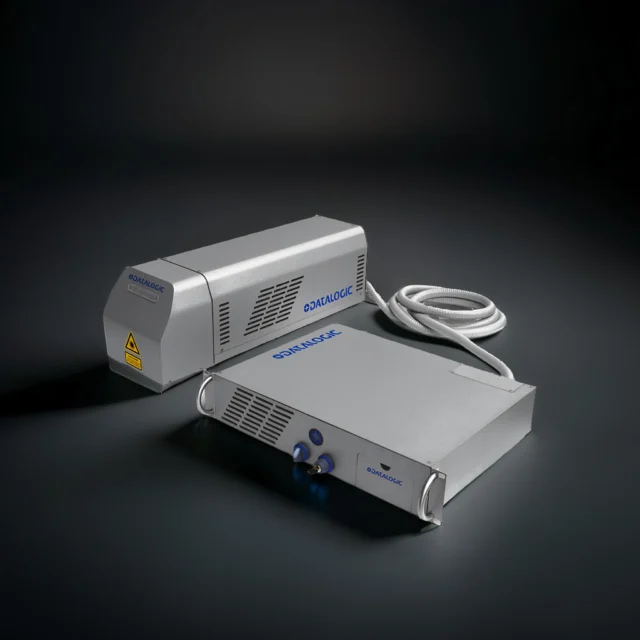
Here’s what happened after switching to Datalogic laser marking:
✔ 95% reduction in marking errors with permanent laser engraving
✔ 20% faster production line thanks to real-time MES integration
✔ 0 labels required — saving thousands in consumables per year
“The switch to laser marking didn’t just help with quality — it made our whole traceability system smarter.”
— Manufacturing Engineer, Tier 1 Powertrain Supplier

featured resoursesDig Deeper Into Laser Marking for Automotive & Aerospace


FAQsEverything You Need to Know About Laser Marking in Automotive
Why is laser marking better than ink or labels for automotive parts?
Laser marking is permanent, high-contrast, and completely maintenance-free. Unlike ink, it doesn’t smear, fade, or require consumables. And it holds up to oil, heat, and abrasion — making it ideal for the tough conditions automotive parts face.
What kind of automotive parts can be marked with a laser?
Can we mark parts without slowing down our line?
What about compliance with IATF 16949 or VIN traceability?
Can laser marking integrate with our MES or ERP?
Do I need a clean or climate-controlled environment?
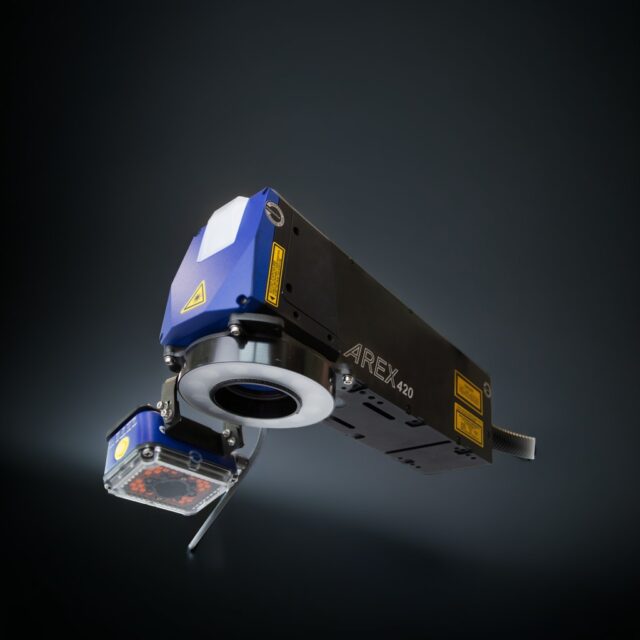
Not at all. Our AREX and UNIQ series lasers are designed for the shop floor. They’re sealed, rugged, and work reliably in dusty, hot, and vibration-prone environments — even next to CNCs or welding stations.
What happens if the code is unreadable?
Laser Marking in Automotive & Aerospace
Ready to Boost Compliance and Cut Downtime?
Let’s make your production line smarter, faster, and fully traceable — with permanent results you can count on.