

industry use cases - automotive manufacturingRobotic Cell Palletization & Repalletization in Automotive Manufacturing
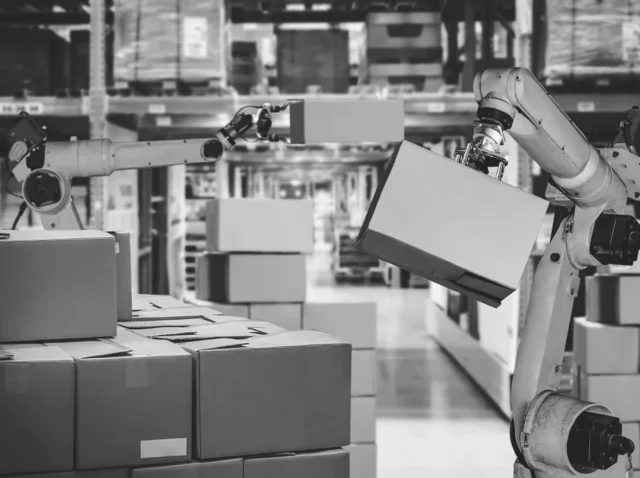
You know how critical it is to keep production and supply chains running smoothly in the automotive industry. When you’re dealing with heavy, bulky parts, manual handling just isn’t an option—it slows things down, increases errors, and risks worker safety. That’s where robotic cell palletization and repalletization come in. These systems don’t just automate stacking; they bring precision, reliability, and efficiency to your material handling processes without disrupting your existing workflows.
But it’s more than just moving parts from point A to point B. Optimized load configurations mean fewer errors, less product damage, and faster order fulfillment. By integrating AI-powered vision systems and real-time analytics, these robotic cells can self-adjust for different load types, detect issues before they become problems, and even predict maintenance needs—keeping your operation running without unexpected downtime.
In short, it’s about getting more done, more safely, with fewer inefficiencies—and keeping your supply chain agile enough to handle whatever demand comes next.
The Challenge:
Handling and stacking large components—such as engines, tires, and body panels—manually is time-consuming, labour-intensive, and prone to safety risks. Inconsistent stacking can also lead to inefficiencies in logistics and storage.
How Robotics Solves It:
✔ Precision Handling: Robotic palletizers equipped with advanced grippers securely lift and place components with minimal risk of damage.
✔ Consistent Stacking: AI-driven stacking ensures even weight distribution and optimized pallet space usage.
✔ Higher Throughput: Robots work continuously, speeding up the process while reducing worker fatigue.
Implementation Example:
A robotic palletizing system stacks heavy engine blocks onto pallets with exact placement and alignment, reducing operator involvement and improving overall cycle times.
The Challenge:
Automotive supply chains often require repalletization of goods to accommodate different shipping configurations, warehouse constraints, or assembly line requirements. Manual repalletization slows operations and increases error risks.
How Robotics Solves It:
✔ Flexible Sorting & Stacking: Robots adjust pallet configurations dynamically based on shipping or production needs.
✔ Automated Handling: Reduces manual intervention, improving speed and consistency.
✔ Seamless Integration: Connects with warehouse management systems (WMS) for real-time adaptability.
Implementation Example:
A robotic repalletization system receives shipments of mixed automotive parts, reorganizes them into production-ready pallets, and prepares them for precise distribution to the assembly line.
The Challenge:
Stacking and handling large volumes of tires and wheels manually leads to inefficient space utilization and safety concerns. Variability in sizes adds complexity to the palletization process.
How Robotics Solves It:
✔ Automated Size Recognition: AI-powered vision systems categorize tires and wheels by size before palletizing.
✔ Space Optimization: Robots adjust stacking patterns to maximize storage density.
✔ Error-Free Handling: Ensures precise stacking and eliminates damage from improper alignment.
Implementation Example:
A robotic palletizing system dynamically arranges tires on pallets according to warehouse layout and outbound shipping configurations, reducing storage space by 25%.
The Challenge:
Automotive manufacturers often use returnable packaging for eco-friendly supply chain operations. Repalletizing components efficiently for return shipments can be resource-intensive.
How Robotics Solves It:
✔ Automated Sorting & Packing: Ensures quick repalletization of returnable containers.
✔ Standardized Arrangements: Robots adhere to predefined configurations for return logistics.
✔ Minimal Downtime: Continuous operation enhances supply chain efficiency.
Implementation Example:
A robotic repalletization cell reorganizes automotive parts into reusable containers for return shipments to suppliers, optimizing logistics while reducing material waste.
product storyHow an Automotive Supplier Increased Warehouse Throughput by 35%
A major automotive parts supplier faced inefficiencies in palletizing and repalletizing processes, causing bottlenecks and wasted warehouse space. Here’s how robotic cell automation transformed their operations:
⚠ Manual palletizing caused inconsistencies, leading to unstable loads and damaged parts.
⚠ Repalletization delays disrupted production, creating inefficiencies in supply chain logistics.
⚠ Warehouse congestion limited storage capacity, affecting overall operational flow.
After implementing robotic cell automation, the results were significant:
✔ 35% Faster Warehouse Throughput – Automated palletizing reduced cycle times and increased handling speed.
✔ 30% Space Optimization – AI-powered repalletization systems maximized storage efficiency.
✔ Zero Damage During Handling – Precision robotic cells ensured safe and secure stacking of automotive components.
By automating their palletizing and repalletizing processes, the supplier reduced errors, optimized warehouse operations, and improved overall efficiency.

featured resoursesDive Deeper into Robotic Cell Automation for Palletization & Repalletization


FAQsEverything You Need to Know About Robotic Palletizing & Repalletization
How does robotic palletization improve efficiency?
Robotic palletizing eliminates human error, increases speed, and ensures precise stacking, reducing the risk of damaged parts and improving workflow.
Can robotic repalletization help with space optimization?
Yes. AI-powered repalletization systems analyze stacking patterns and reorganize loads to maximize warehouse space while improving retrieval efficiency.
How long does it take to integrate robotic palletizing into my facility?
Our solutions are designed for fast deployment with minimal disruption, ensuring a smooth transition into automated operations.
Are robotic palletizing systems compatible with different automotive components?
Absolutely. Our robotic cells are customizable to handle a variety of automotive parts, including heavy and delicate components.
What are the maintenance requirements for robotic palletizing systems?
Our robotic solutions are built for long-term reliability with minimal maintenance. We also provide ongoing support to keep your systems running smoothly.
Robotic Cell Palletization & Repalletization in Automotive Manufacturing