

industry use cases - electronics manufacturingSmarter Automation for Electronics: Precision Handling Without Compromise
Let’s be real. If you’re managing production or logistics in the electronics industry, you’re facing relentless pressure. The demand for precision is non-negotiable. Supply chain disruptions are a constant threat. And let’s not forget the ever-present need to optimize costs while keeping up with fast-changing product lines.
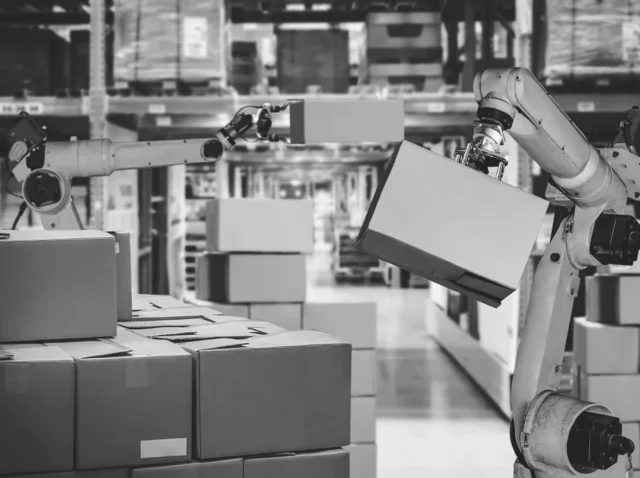
That’s where robotic palletization and repalletization come in. These automation solutions ensure efficient handling of delicate and high-value components, reduce waste, and keep production moving—without disrupting your existing operations. Let’s explore how these systems are making a difference in electronics manufacturing.
The Challenge:
Handling delicate items like semiconductors, circuit boards, and sensors manually is risky. Errors in stacking can lead to damage, contamination, or misalignment, increasing defect rates and costs.
How Robotics Solves It:
✔ Precision Handling: Advanced grippers and vacuum systems gently pick and place fragile items.
✔ Consistent Stacking: AI-driven robotics ensure uniform and secure palletization, reducing breakage.
✔ Cleanroom Compatibility: Fully enclosed systems prevent contamination in sensitive environments.
Implementation Example:
A semiconductor manufacturer integrated robotic palletization for chip trays, ensuring consistent stacking while reducing handling-related defects by 40%.
The Challenge:
Electronics manufacturers deal with diverse products—varying in size, weight, and packaging. Manual organization leads to inefficiencies, misplacements, and space underutilization.
How Robotics Solves It:
✔ Dynamic Load Handling: Robots adjust grip and stacking patterns based on item size and shape.
✔ Real-Time Inventory Integration: Automated tracking ensures accurate stock management.
✔ Optimized Space Utilization: AI-driven palletizing configurations maximize storage efficiency.
Implementation Example:
A global electronics supplier deployed robotic palletizing for mixed SKUs, cutting warehouse retrieval times by 30% and optimizing storage capacity.
The Challenge:
Sensitive electronics—such as LCD panels, batteries, and microprocessors—require careful stacking and cushioning during packing. Manual handling leads to breakage, increasing warranty claims and losses.
How Robotics Solves It:
✔ Shock-Resistant Palletizing: Soft-touch robotic handling prevents impact damage.
✔ Automated Cushioning: Robots integrate protective layers between products to absorb shocks.
✔ Seamless Integration with AGVs: Automated transport ensures smooth handling from production to shipping.
Implementation Example:
An LCD manufacturer implemented robotic palletizing with shock-resistant layering, reducing transit damage by 50%.
The Challenge:
Electronics production lines often shift between different product batches. Manual repalletization and reconfiguration cause bottlenecks and increase labor costs.
How Robotics Solves It:
✔ Quick Changeover Capabilities: Robots adjust stacking patterns automatically for different product types.
✔ Flexible Re-Palletization: AI-driven systems reorganize stock based on shipping and order priorities.
✔ Scalability: Robots handle varying production demands without disrupting workflow.
Implementation Example:
An electronics contract manufacturer automated repalletization for mixed-batch components, cutting production changeover times by 60% and reducing labor costs.



product storyHow an Electronics Manufacturer Reduced Damage & Increased Throughput
A leading electronics manufacturer faced challenges with handling fragile microchips and circuit boards. Manual palletization led to product damage, inefficient storage, and increased labor costs.
After implementing robotic palletization and repalletization:
✔ Product damage dropped by 45%, improving yield and reducing waste.
✔ Packing and shipping throughput increased by 35%, speeding up fulfillment.
✔ Workforce efficiency improved, allowing employees to focus on high-value tasks.
With automation, the company streamlined logistics while maintaining strict quality standards.

featured resoursesExplore Robotics in Electronics Manufacturing

FAQsEverything You Need to Know About Robotic Palletization
How do robotic palletizing systems handle fragile electronics?
Advanced robotic arms with adaptive grippers and vacuum technology ensure gentle handling. AI-driven vision systems precisely place items to avoid damage.
Can robots adjust to different product sizes and packaging?
Yes. Our solutions dynamically adapt to different dimensions and weights, enabling mixed-SKU palletization without manual intervention.
Is robotic palletization suitable for cleanroom environments?
Absolutely. Our systems are designed for cleanroom compliance, ensuring no contamination risks.
How quickly can robotic palletization be integrated into an existing production line?
Integration is seamless, typically requiring minimal downtime. Our modular systems fit into existing workflows without major infrastructure changes.
Will automation replace human workers in electronics manufacturing?
No. Robots handle repetitive and precision-based tasks, allowing your workforce to focus on quality control, process optimization, and innovation.
Robotic Cell Palletization & Repalletization in Electronics Manufacturing
Ready to Automate Your Electronics Manufacturing?
Let’s take your production efficiency to the next level.