
When you have real-world variation— a slightly shifted part, an “almost identical” SKU, a new operator, a carton with a different tolerance, a pallet not picked up on time—your line starts to oscillate. You don’t lose capacity because of one major incident, but because of an accumulation of dozens of small things.
Artsys Automation collaborates with Universal Robots to deliver production line stability through standardized applications, clearly defined recipes, and predefined exception logic from the very beginning — so your company does not depend on the single best operator to keep things running.
No massive safety fencing or full layout redesign required. Cobots can be integrated incrementally, station by station, without major production shutdowns.
Cobots handle small variations (position shifts, SKU changes, packaging differences, upstream rhythm) through recipes and exception logic. They reduce the micro-stoppages that don’t show up in reports but silently erode real capacity.
The system behaves predictably even when the experienced operator is not present. Clear procedures, restart from last valid step, standardized behavior.
Applications like pick & place, packaging, palletizing, and machine tending generate direct impact through: – recovered capacity, increased machine utilization, reduced scrap. lower overtime.
Product changeover becomes recipe selection, not mechanical reconfiguration. This allows controlled variation without operational instability.
The same architecture can be replicated across cells and production lines. You reduce cost and risk when expanding automation plant-wide.
Artsys Automation integrates Universal Robots collaborative robots as operational infrastructure, not as a one-off technical project. We don’t start from “which robot model do we choose?” but from “how must the system react when things aren’t perfect?” That’s why we define from the start:
Collaborative Robots
A slightly shifted part, an almost identical SKU, a new or tired operator — and the rhythm starts to oscillate. The oscillation doesn’t show up in the report as major downtime, but it translates into accumulation, micro-stops, and capacity loss per shift. We optimize not only maximum speed, but cycle stability:
Real problem: Unaccounted micro-stops, manual realignment, small variations that block downstream
Operational risk: Irregular rhythm, accumulation, 60–100 min loss/shift without official downtime
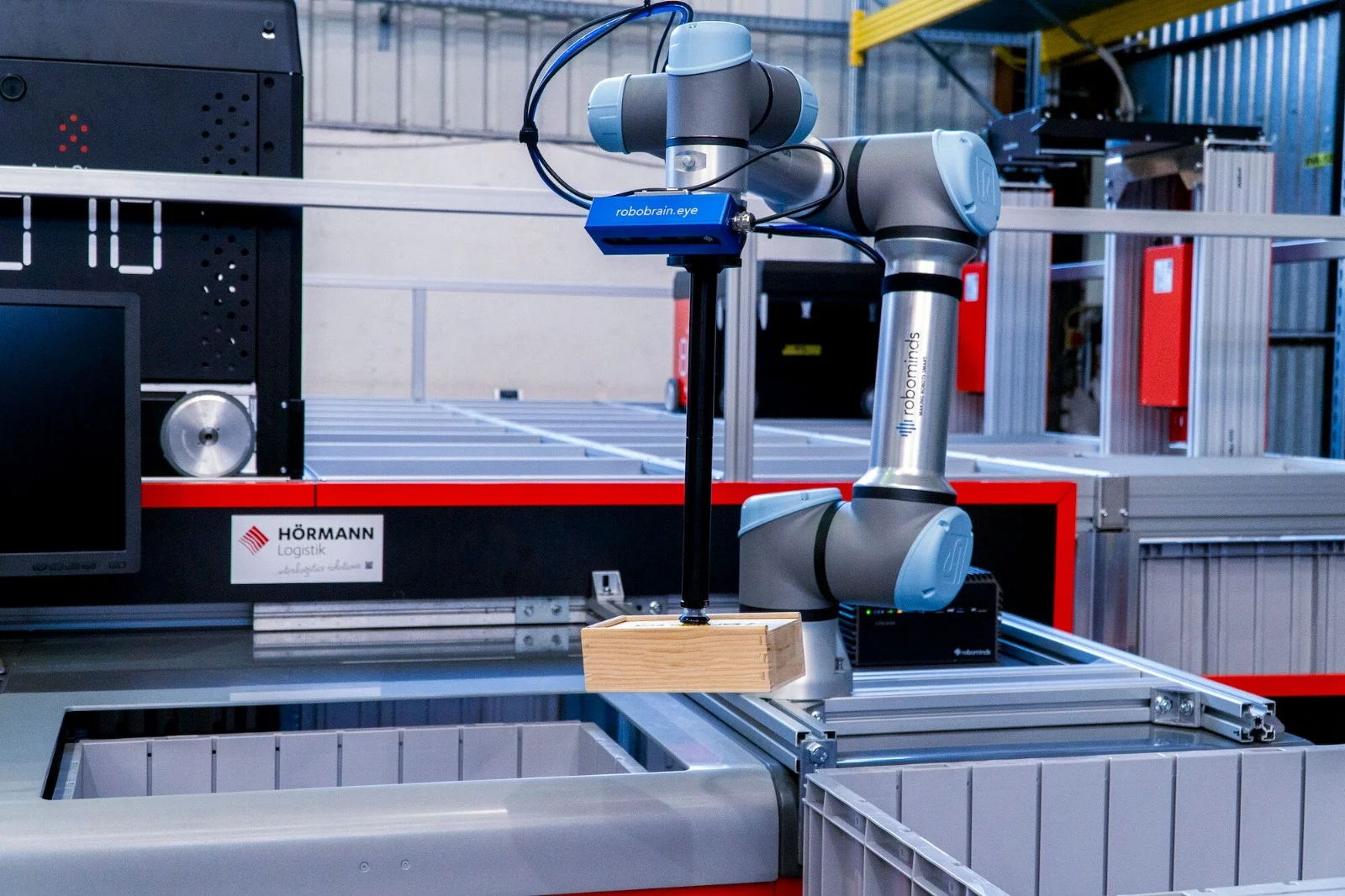
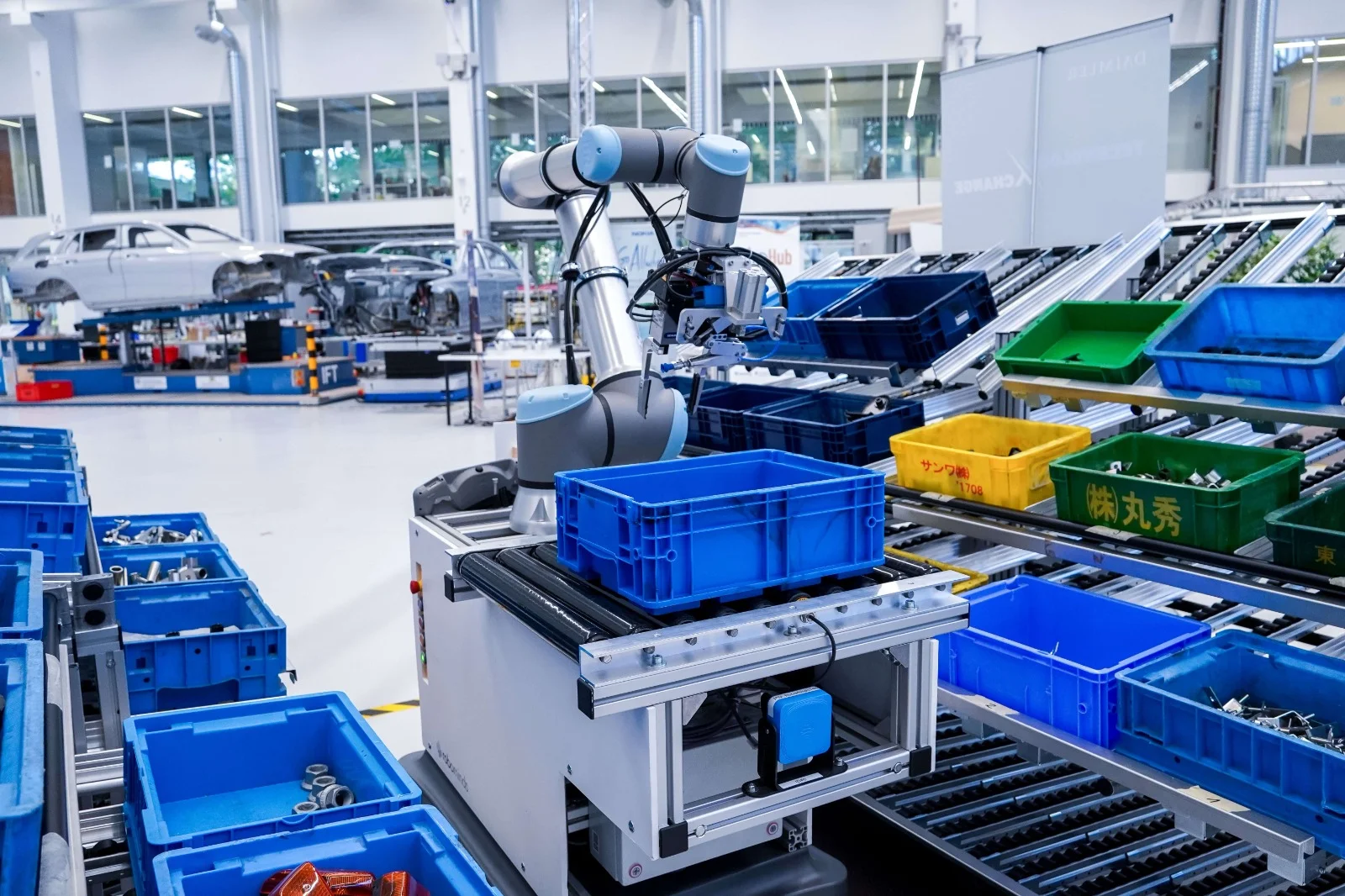
What Artsys delivers: Adaptive pick & place, exception handling, fast SKU changeover
Production results: Constant rhythm, stable upstream, fewer interventions
Financial impact: +3–8% real capacity recovered; lower cost/part by eliminating dead time; fewer scrap and overtime
Technology used | UR3e / UR7 / UR12e + Vision + AI Accelerator
Collaborative RobotsIn packaging, the winner isn’t the fastest — it’s the one that is most adaptable without losing control: multiple SKUs, promotions, frequent format changes, and space pressure.
When we introduce collaborative robots as infrastructure, we move decision-making from improvisation into rules.
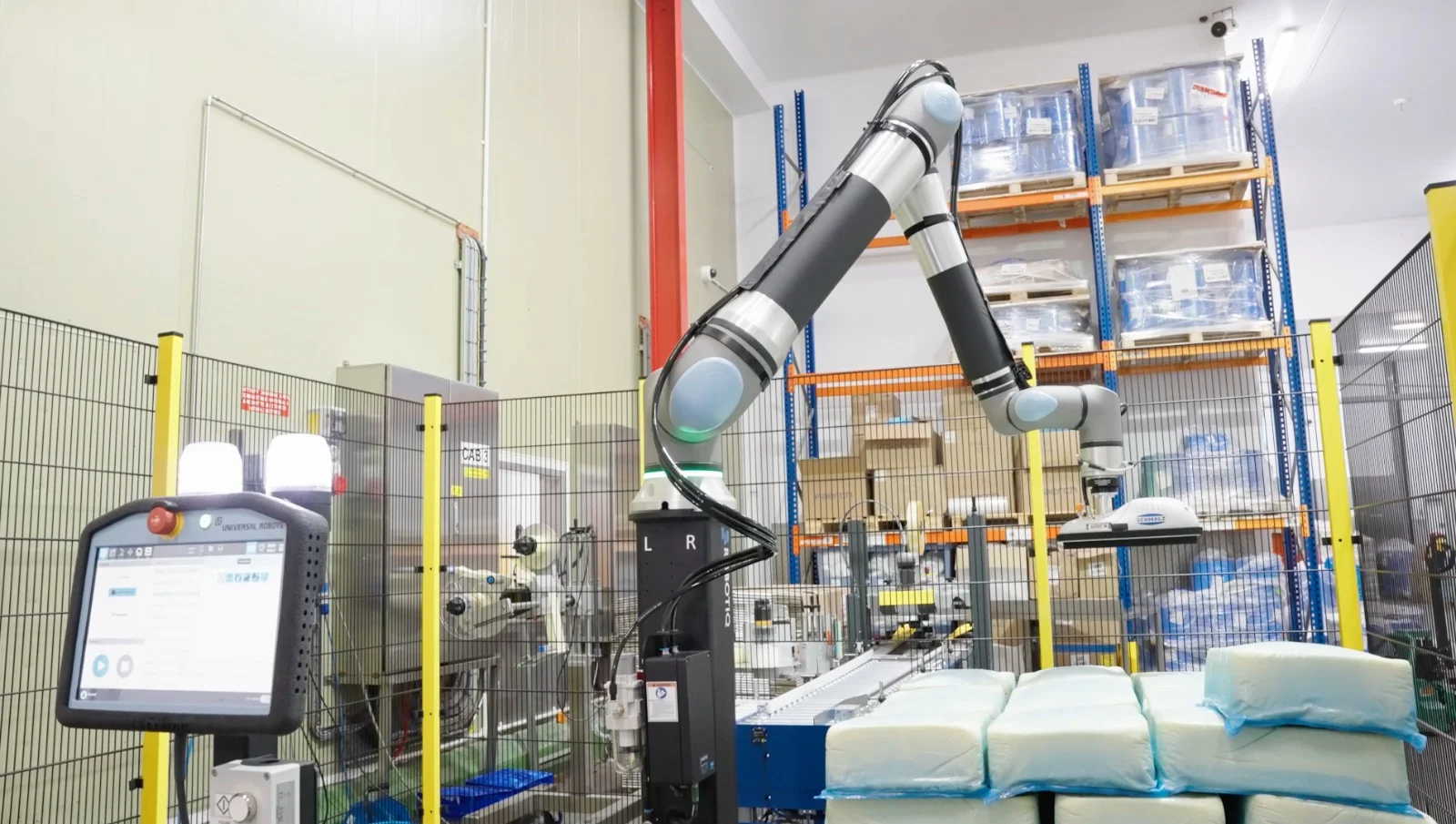
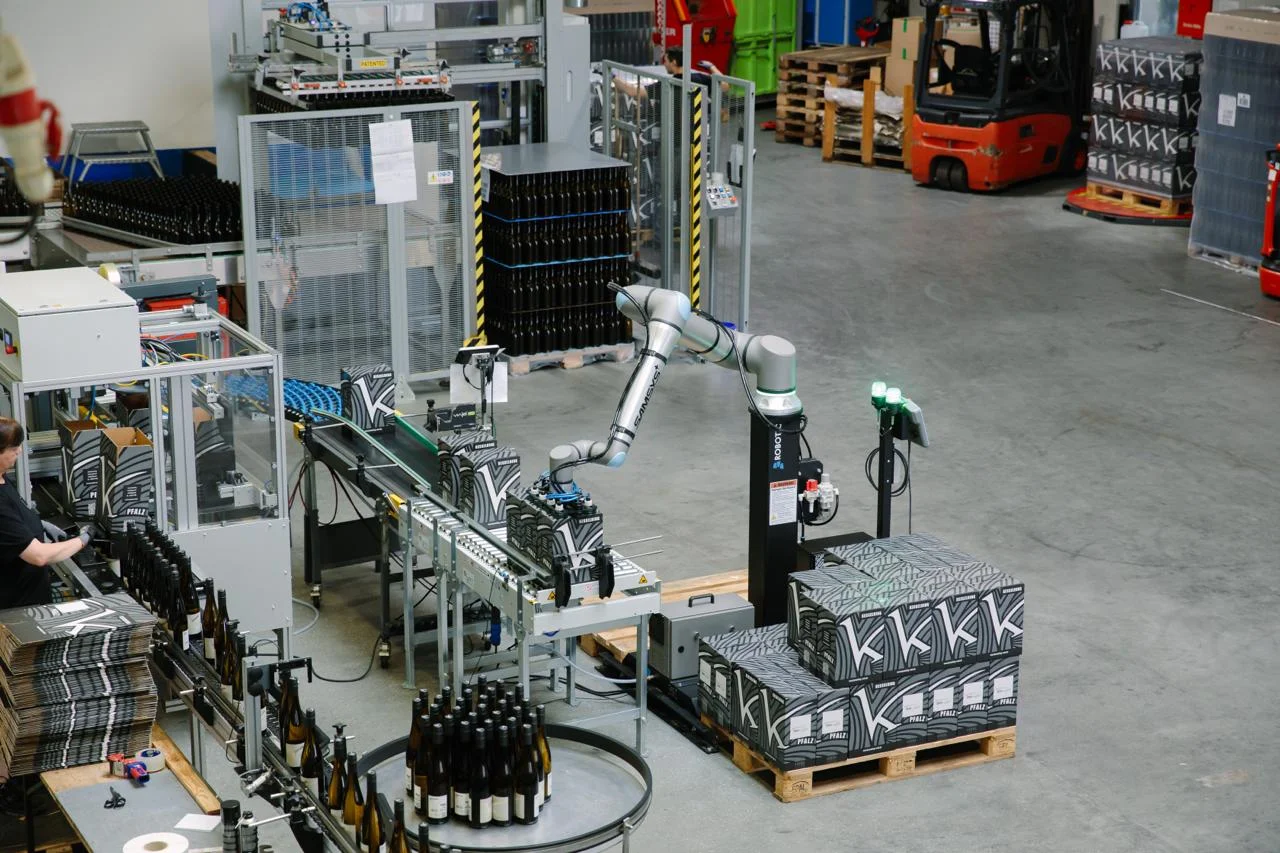
Collaborative RobotsEnd-of-line is where all upstream variation accumulates. If palletizing slows down, upstream pays. If partial pallets, deformed cartons, or logistics delays appear, the entire line starts to oscillate. We don’t solve lifting a carton — we solve the exception logic:
Real problem: Partial pallet, full pallet not picked up, pattern changed
Operational risk: Upstream blockage, repeated stops, operator dependency
What Artsys delivers: Exception handling, logic buffer, automatic recovery
Production result: Predictable end-of-line 24/7
Financial impact: Eliminate 1–2 hours of loss/shift; reduce cost for manual handling; reduce ergonomic accidents
Technology used: UR10e / UR16e / UR20 / UR30
Collaborative RobotsIf there are 20–40 seconds of human intervention between cycles, utilization drops dramatically, even if the CNC is performant. Correct automation eliminates dead time between cycles and turns the machine from an “operator-dependent” piece of equipment into a predictable asset. Here we don’t solve the robot’s speed — we solve the careful utilization of the machine:
Collaborative RobotsIn many factories, quality control is separate from the flow. The problem is that the defect is discovered late. And late defects are expensive.
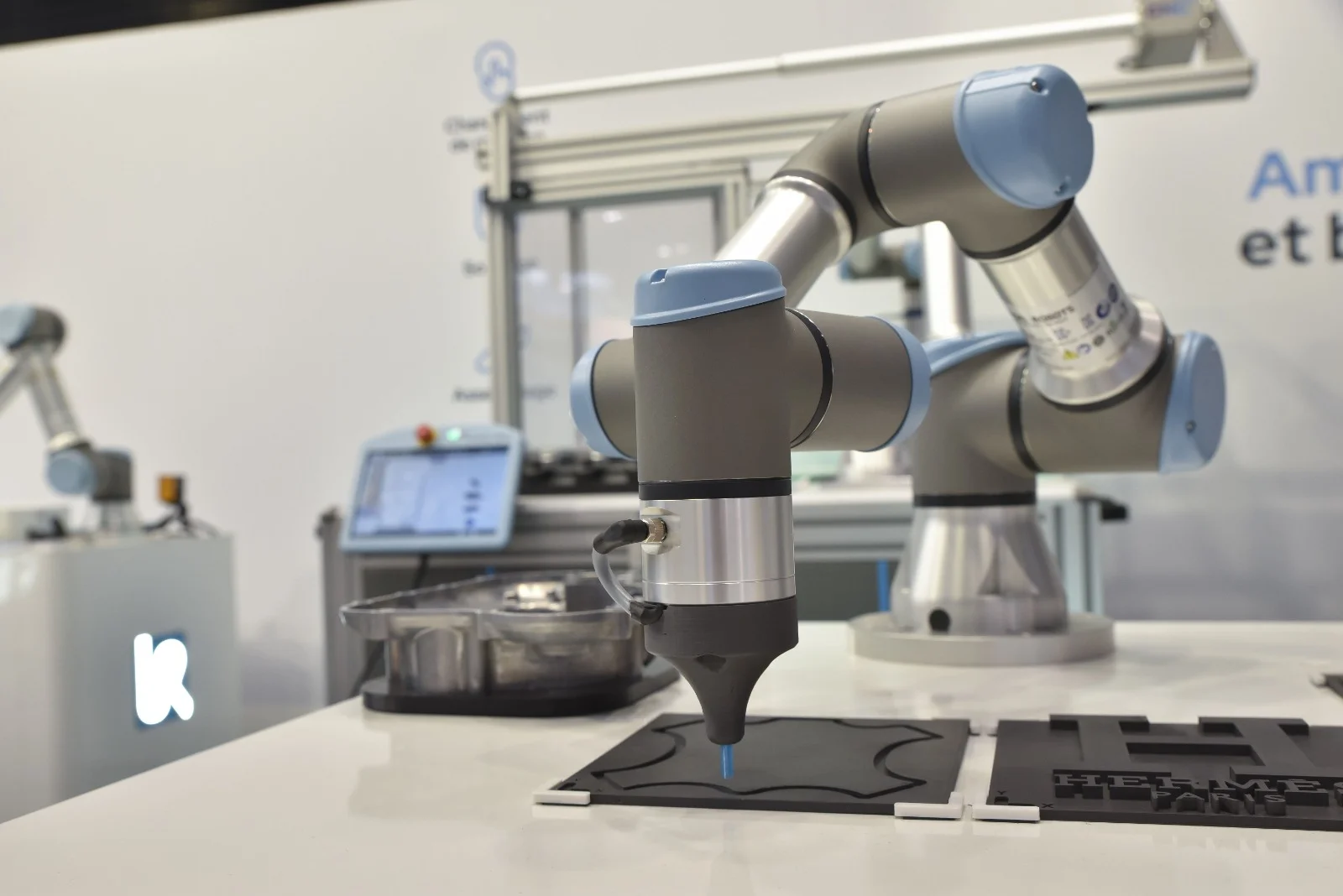
When verification of orientation, labels, or visual defects is integrated directly in-line, you not only prevent propagation downstream, but you also eliminate additional stations, handling, and rework:
Collaborative RobotsArtsys Automation’s approach starts from a premise that is, surprisingly, missing in many automation projects: the problem is not what the colaborative robot can do, but how we reduce dependence on operator availability in repetitive tasks, how we implement standard behavior where variation adds no value, how we move operators from physical, monotonous roles into supervision and exception-handling roles, and how we make cost/part much more predictable.
Stability in 2–3 shifts, not only in FAT/SAT Artsys designs the application around real scenarios (shifts, SKUs, consumables, logistics), so it doesn’t “work for a month” and then improvisations begin.
We standardize recipes + exceptions (retry / reject / skip / buffer / restart from last valid step), so repeated short stops no longer break the line’s rhythm.
The system is designed to function predictably even when the experienced operator is missing: clear interfaces, simple procedures, readable logic.
We define explicit limits (product, packaging, weight, tolerances) and how the system reacts when you go outside them. That makes SKU changeovers fast and repeatable, without “preventive slowing down.”
We don’t consider the project “done” when the robot runs, but when the team can operate, adjust, and restart it on their own. You reduce waiting time for service and “we’re waiting for the integrator” bottlenecks.
We integrate cells as infrastructure: the same principles, the same types of recipes/exceptions, the same integration patterns. That reduces cost and risk when you want to scale to other lines.
What happens when the part is not exactly in the programmed position?
The robot doesn’t stop and doesn’t “wait for it to be corrected.” With Vision integration (2D/3D), position and orientation are detected in real time, and the trajectory is adjusted dynamically
Result:
no micro-stops, no need for manual realignment, and the rhythm stays constant.
If the application is built correctly, the change doesn’t mean complex reprogramming or mechanical adjustments. It means selecting a validated recipe, with clear limits for weight, size, and tolerances.
Result:
setup in minutes, not hours.
No improvisation on shift 3.
The robot enters controlled safe mode and can resume the cycle from the last valid step, without a full cell reset. Automation designed as infrastructure includes clearly defined recovery scenarios.
Result: interventions don’t destabilize upstream.
It doesn’t immediately trigger a general alarm. The defined rule is applied: automatic retry, controlled rejection, or skip cycle. The difference is between a system that “stops” and one that “handles the exception.”
Result: fewer manual restarts, less operational stress.
In a mature application, the robot can enter buffer mode, finalize the partial pallet, or redirect to an alternative pallet. If these scenarios are not defined, upstream stops.
Result: palletizing no longer becomes a critical blockage point.
Result: interventions don’t destabilize upstream.
A cobot doesn’t get tired and doesn’t slow down at the end of the shift. It can sustain two or three shifts without behavior degradation. In addition, incremental integration allows gradual scaling — not massive projects that block the factory for months.
If limits are defined correctly, the system absorbs it. If they are not defined, manual adjustments, short stops, and progressive slowdowns appear.
Mature automation doesn’t eliminate variation. It controls it
This is the critical question. If the system depends on an external specialist or a single internal technician, automation is not infrastructure — it is latent risk. By design, Artsys + Universal Robots solutions are built for local control:
readable programming, clear recipes, simple restart procedures.
Result: the factory owns the solution.
AI Accelerator doesn’t add unnecessary complexity.
It moves processing next to the robot and enables absorption of more complex visual variations without latency and without fragile external PCs.
Result: fewer stops caused by “almost compliant” situations.
Collaborative Robots