
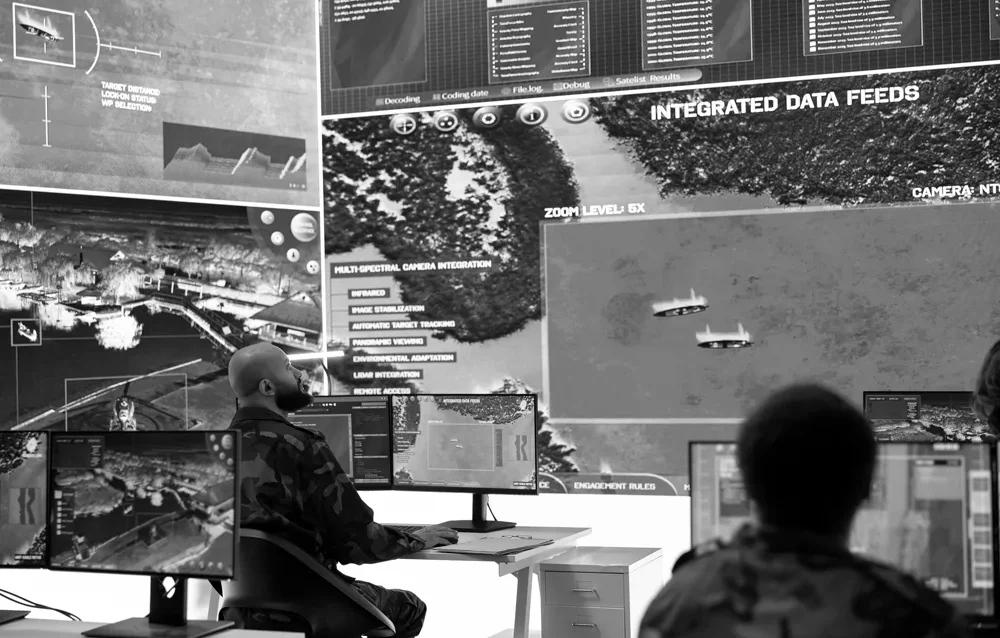
A supply drone goes down over rugged terrain. The field unit’s comms drop. Their medkits are unaccounted for. Command is blind. No intel. No backup. No margin for error. This isn’t fiction. It’s what happens when battlefield tech depends on the cloud—and the cloud disappears.
Imagine critical supplies lost in transit, stalled communication between units, or delayed decision-making because of lagging data. These aren’t hypothetical scenarios; they are daily realities for defence teams relying on fragile networks and centralised cloud systems in high-risk or remote environments. When connectivity goes dark, so does operational support.
The challenge is clear: traditional cloud-based AI isn’t built for the battlefield. It’s time for defence technology to pivot its focus toward edge automation. Why? Because in the field, data isn’t just information—it’s survival.
The Cloud Isn’t Enough for Defence
Military innovation often centres around AI-powered, cloud-based planning and remote coordination tools. And while these technologies play a pivotal role behind secure lines, they falter in real-world conditions.
Here are the key challenges defence professionals face when relying solely on cloud solutions:
- Network Dependence: Connectivity is never guaranteed in isolated or contested zones, leaving cloud-reliant systems vulnerable.
- Data Latency: Seconds matter during life-or-death scenarios. Delays from centralised data processing can compromise operations.
- Manual Logistics: Tracking, validating, and deploying assets often falls to manual processes, riddled with inefficiencies and prone to human error.
These problems aren’t new, and neither are the consequences. What is new is the solution. Edge automation offers decentralised, real-time intelligence that functions even when communication pipelines are compromised.
Why Edge Automation is a Tactical Advantage
Edge systems operate close to the source of action, whether it’s on a base, in a vehicle, or at a remote field site. Unlike cloud-dependent tools, edge automation processes data locally and works offline, providing instant decision-making capabilities where they’re needed most.
Our roots are in edge-critical environments—emergency medicine, high-volume logistics, and real-time industrial automation. We’ve helped frontline responders work without network support. We’ve tracked high-value assets in unpredictable terrain. Now we’re bringing that same intelligence, resilience, and adaptability to defence teams operating in the most complex conditions on earth.
Why Defence Teams Need Edge Automation:
- Resilient Operations. When networks fail, edge-powered systems step up. Fully autonomous and fail-proof, they ensure that critical processes continue without interruption.
- Real-Time Visibility. With edge units on-site, decision-makers get immediate access to essential data—even in the harshest terrains and most volatile scenarios.
- Streamlined Logistics. Automating inventory, supplies tracking, and asset validation eliminates bottlenecks and accelerates deployment times.
Manual Logistics → Edge-Powered Visibility Reality: Most supply chains still rely on spreadsheets, verbal updates, or delayed batch uploads. Edge Fix: RFID and IoT-enabled tracking in the field provides instant validation and location of gear or personnel. Tactical Advantage: Fewer lost kits. Faster deployment. More trust in readiness.
Edge automation is no longer a luxury. It’s an operational necessity, enabling defence units to move beyond outdated processes and unreliable tech.
From Theory to Practice: How Defence Can Leverage Edge Automation
Deploying edge automation in defence doesn’t require an all-or-nothing overhaul. It’s about taking smart, incremental steps to modernise your operations. Here’s how to make it happen:
- Deploy Mobile Edge Kits in Field Units. Equip units with portable edge devices integrated with barcode scanners, RFID, and IoT sensors. These tools track, monitor, and validate assets in real time, even in total network isolation.
- Automate Base Logistics. Use edge middleware to connect field data with command centres in near real time. This instant visibility ensures smoother inventory management, quicker supply deployments, and reduced manual workload.
- Harden Edge Infrastructure. Invest in rugged, encrypted edge devices built to withstand extreme environmental conditions. These systems ensure reliability, security, and long-term resilience, no matter the operational context.
Real World Impact
In a rugged training exercise simulating supply disruption, a battalion equipped with edge kits reduced lost equipment reports by 60%. Portable RFID scanners and IoT sensors automatically tracked field packs, medical kits, and rations, giving command teams instant updates even in total signal blackout. What once required 3 days of manual reconciliation was completed in under 4 hours—with zero field downtime.
The Takeaway
On the battlefield, data is power—but only if you can access it in the moment. Edge automation transforms disconnected units into autonomous, informed, and responsive cells. It bridges the gap where cloud systems fail and gives defence teams the tools they need to thrive in uncertain conditions.
The truth is, you don’t need to replace every system to unlock these advantages. Start small. Focus on solving your most persistent pain points with targeted edge solutions, and build from there.
At Artsys, we develop scalable, rugged edge automation platforms that are adaptable to the unique needs of defence teams. Our mission is to empower every level of your operations with smarter, seamless technologies that work when and where it matters most.
book a call with an artsys edge specialistBook a confidential readiness session with our Defence Edge Advisors.
We’ll walk you through how to modernise logistics and mission coordination with minimal disruption—and maximum resilience. Your battlefield edge isn’t in the cloud. It’s right here.