
Why Everyone Is Blaming the Wrong Thing
Walk into any production floor, warehouse, or distribution center, and you’ll hear a familiar set of complaints:
“Our systems are too old to keep up.”
“Everything’s manual and clunky.”
“We can’t risk changing it—it might break everything.”
And at first glance, it’s easy to agree. That outdated PLC, the aging MES, or the manual data entry stations do look like the root of all evil. They’re slow, disconnected, and far from user-friendly.
But here’s the deeper issue—it’s not the legacy systems that are truly holding you back. It’s the fear of touching them.
Many organizations live in this uncomfortable limbo:
- They know their systems are outdated.
- They know they’re losing time, data, and efficiency.
- But the idea of “upgrading” feels like jumping into the unknown.
Why? Because:
- Full replacements are expensive.
- Implementation timelines stretch from months to years.
- Internal teams fear downtime, employee resistance, and unintended consequences.
So instead of progress, they choose paralysis.
Instead of innovation, they settle for patches and workarounds.
Instead of improvement, they gamble on survival.
This fear is understandable. But it’s also deeply costly.
We’ve Been There. We Understand.
At Artsys, our team is made up of engineers, operators, and solution architects who’ve worked in environments just like yours. We’re not theorists—we’ve stood on the factory floor, trying to modernize a process without halting production or replacing systems that have been running reliably (albeit imperfectly) for decades.
We’ve helped dozens of factories, warehouses, and production lines modernize without ripping out their core systems.
We know what it feels like to operate under pressure. We’ve worked in environments where even 10 minutes of downtime is unacceptable. We’ve been in plants where the control systems were older than the team managing them.
But here’s the good news: you don’t need to destroy to evolve.
Using edge automation, we’ve helped clients make small, strategic changes that unlock huge efficiency gains. The transformation doesn’t have to be loud or risky—it can be incremental, modular, and smart.
3 Moves to Unlock Modernization Without the Mayhem
Let’s break down exactly how organizations like yours are turning stagnation into transformation—without ripping and replacing.
- Start with Smart Data Layers
What this means:
Begin by adding edge devices—like barcode scanners, RFID tags/readers, vision systems, and sensors—that work on top of your existing infrastructure. These tools capture data directly at the source: on the line, at the dock, on the product.
What most people think:
“To get clean, real-time data, I need to replace our entire MES or ERP.”
Why that’s wrong:
Your systems might be slow, but they still work. The real issue is that they weren’t designed to see what’s happening in real time.
Contrast:
A new ERP won’t give you better data unless your front-line capture improves. Edge layers collect the right data at the right time—and send it to whatever system you’re using now.
- Automate the High-Friction Tasks
What this means:
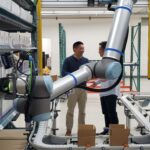
Look for manual bottlenecks—labeling, scanning, palletizing, data entry—and automate those first. These are often low-cost, high-ROI wins. Cobots, print-and-apply systems, or mobile scanning terminals can dramatically reduce time, fatigue, and error rates.
What most people think:
“We should automate everything from the start, across all departments.”
Why that’s wrong:
Large-scale, full-system automation can quickly overwhelm your teams, disrupt production, and introduce risk—especially if legacy systems are involved.
Contrast:
When you start by fixing one pain point, you not only show instant ROI—you also build trust with your operators and leadership. These small wins create the momentum needed for long-term transformation.
- Build Bridges, Not Walls
What this means:
Instead of fighting your old systems, connect them. Middleware solutions like lightweight APIs, industrial IoT gateways, and custom connectors can link PLCs, MES, ERP, and your new edge systems into a single, real-time flow.
What most people think:
“My old systems are incompatible. We need to scrap them.”
Why that’s wrong:
Legacy systems are often reliable and deeply embedded in operations. Throwing them away disrupts years of process design, training, and system logic.
Contrast:
Integrating instead of replacing protects your investment—and gives you modern capability at a fraction of the cost.
Takeaway Lessons: How You Can Start Modernizing Today
You don’t need to launch a massive digital transformation project to see real results. In fact, small, focused steps can unlock major gains—and build momentum across your entire operation.
Here’s how we’ve approached it in past experience, and how you can apply the same lessons right now in your business:
- Start with a Single Pain Point
Begin where the problem is loudest—like a manual labeling station, inventory mismatch, or bottleneck in outbound logistics. You don’t need to fix everything at once.
Lesson: Look for the high-friction task that is repetitive, error-prone, or slow. That’s your best candidate for edge automation.
- Layer Technology Over What Already Works
We don’t believe in tearing systems apart. Use edge-connected devices—like scanners or print-and-apply systems—that plug into your current setup and give you an immediate upgrade.
Lesson: Focus on augmentation, not replacement. Your existing MES or ERP might be old, but it can still work with modern devices using middleware.
- Validate Every Step at the Edge
Add simple validation at the point of action—like scanning a label before printing or confirming product IDs before packaging. These small checks eliminate major errors downstream.
Lesson: Let the system catch mistakes before they become rework. Edge validation is fast, accurate, and scalable.
- Use Middleware to Sync Everything in Real Time
Middleware bridges the gap between old and new—connecting edge devices to your central systems without disrupting operations.
Lesson: Middleware enables real-time visibility without needing to change your core systems. It’s the glue that keeps the flow working.
- Expand from a Success Story
Once you prove value in one area—reduced rework, faster processes, fewer errors—you’ll earn internal buy-in. That’s when you scale.
Lesson: Let results lead your rollout. Focus on quick ROI first, then build momentum across more stations or departments.
book a call with an artsys edge specialistReady to Modernize Without the Risk?
If you’re stuck in the fear zone—afraid to touch your legacy systems—you’re not alone. But there is a way forward that doesn’t involve ripping out what’s already working.
Let’s talk about your operation.
Let’s identify that first friction point.
Let’s make transformation feel manageable—and effective.